
Aftermarket vs Genuine OEM Car Keys: When Each Is the Right Call
What each grade means, when to fit which, and how to describe it to the customer honestly
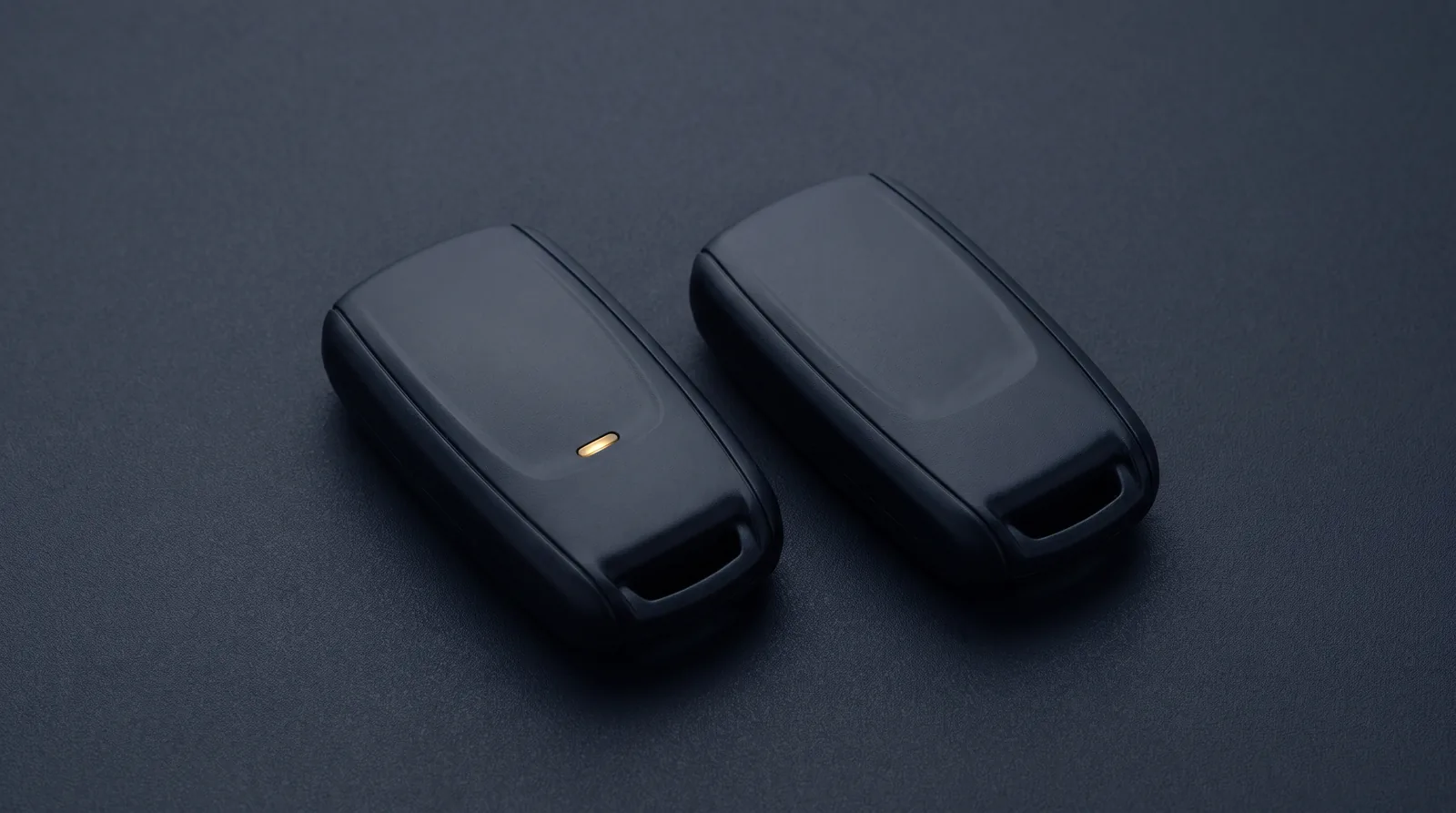
An aftermarket car key is a key or remote made by a third party to work in place of the factory part; a genuine OEM key is the part the vehicle manufacturer supplies under its own part number, usually made by the same contractor that built the original. For most add-a-key and all-keys-lost jobs on vehicles more than a few years old, a correctly matched aftermarket fob is the right call: it programs the same way, costs the shop less and is stocked in depth. Genuine OEM is the right call when the customer asks for it, when the vehicle is new or under warranty, when a convenience feature only works reliably with the factory board, or when your own experience says the aftermarket version for that platform is inconsistent. Car Key Source stocks both, aftermarket in depth and a small genuine OEM line, and every listing states its grade.
What "aftermarket" actually means
An aftermarket key or remote is built by a manufacturer other than the one the vehicle maker contracted. It carries the same FCC ID and frequency, uses a compatible transponder chip and is cut and programmed exactly as the factory part is. What differs is who made the circuit board, the case, the buttons and the blade, and under what quality control.
Good aftermarket parts match the factory part on every detail that matters to programming: FCC ID, frequency (315, 433 or 902 MHz), chip family (4D, 8A, ID46, ID47, ID49 and so on), button count and layout. Poor aftermarket parts get one of those wrong, or use a board that programs on some years of a platform and not others. That is why a serious supplier lists the exact years, FCC ID, part number, chip and frequency on every aftermarket fob, and why you should read the listing, not the photo. The guide Car Key Types Explained covers the physical formats; Find the FCC ID on a Key Fob covers reading the customer's fob.
There are universal remotes (Xhorse, Lonsdor, KEYDIY, Autel) that generate a remote for many vehicles from one blank, and there are vehicle-specific aftermarket fobs that replicate one factory part. Both are aftermarket. Both are legitimate trade stock when they are labelled honestly.
What "genuine OEM" actually means
A genuine OEM key or remote is the part the vehicle manufacturer supplies under its own part number: for example a Toyota 8990H- number, a Honda or Acura 72147- number, a Hyundai 95440- number, a Mazda -67-5DY number or a Stellantis 68xxxxxx number. The board, case and blade are the ones the factory approved, and the part is what a dealer would fit.
Two things follow. First, a genuine OEM part will program like the original because it is the original design. Second, it is not always the newest or the most convenient part: OEM numbers are superseded, some carry a driver-1 or driver-2 memory setting that matters for seat-memory vehicles, and some dealers will only fit the current superseded number. When you buy genuine OEM from a distributor, check that the part number on the listing is the one the vehicle takes, not just that the FCC ID matches.
At Car Key Source, only rows in the genuine OEM line are described as OEM. Aftermarket rows are described as aftermarket, and where they list an OEM part number it is a cross-reference for the part they replace, not a grade claim. The two grades sit side by side so you can compare them on the same FCC ID:
| Vehicle | Aftermarket listing | Genuine OEM listing |
|---|---|---|
| 2019–2021 Toyota RAV4, FCC ID HYQ14FBC | 4-button smart key, HYQ14FBC 0351 (aftermarket) | 3-button smart key, PN 8990H-42010 (OEM) |
| 2011–2020 Dodge and Chrysler, FCC ID M3N-40821302 | 5-button smart key, PN 68143505AC (aftermarket) | 4-button smart key, PN 68051387AC (OEM) |
Note that the button counts differ within a pair. The FCC ID tells you the radio and immobilizer platform; the part number tells you the exact button layout and trim fit. Match both against the vehicle.
When aftermarket is the right call
| Situation | Why aftermarket wins |
|---|---|
| Vehicle is out of warranty and more than three or four years old | The platform is well understood, aftermarket boards have had time to mature, and the customer is price-sensitive |
| Add-a-key or spare-key job | Programming path is the same as OEM; the risk is low and the margin is better |
| High-turn platforms (Toyota, Honda, Ford, Nissan, GM, Hyundai/Kia, Stellantis) | Deep aftermarket stock by FCC ID and part number; you can keep bundles in the van |
| Customer wants a working key today, not a dealer order | Aftermarket is what is on the shelf |
| Shell or blade damage with a working board | A shell or a universal remote may be all that is needed |
| Margin matters on the quote | Lower cost of goods with the same labour |
The catch is consistency. On a few platforms the aftermarket board for a given FCC ID is fine for some years and fails on others. Keep your own notes by platform; when a listing says "verify against the vehicle", do it. Our guide Stocking the Right Fobs explains how to build a van stock around the platforms you actually see.
When genuine OEM is the right call
| Situation | Why genuine OEM wins |
|---|---|
| Vehicle is new or still under the manufacturer's warranty | Avoids any argument with the dealer about non-factory parts |
| Customer explicitly asks for the factory part | You are selling what they asked for, at a price that reflects it |
| Convenience features that depend on the factory board | Seat and mirror memory (driver 1 / driver 2 fobs), remote start, hands-free liftgate, phone-as-key pairing; some work inconsistently with aftermarket boards on some platforms |
| Platforms where aftermarket has a poor track record in your own experience | Your programming guarantee protects you either way, but the callback costs you a day |
| Fleet, dealer, insurance or lease-return work | Paperwork or the lessor often specifies factory keys |
Genuine OEM stock is thinner everywhere, including at Car Key Source, because it is bought from the manufacturer's supply chain rather than made to order. Check the exact part number on the listing and confirm supersession before you promise it.
Used keys and lock-in
A used key from a salvage vehicle is a third category and a trap on many platforms. Many smart keys and some transponder keys lock to the first vehicle they are programmed to and cannot be reprogrammed to another, so a used OEM fob is often worth less than a new aftermarket one. Where a used key can be renewed (some Xhorse and Lonsdor tools support unlocking specific boards), it is still a used board with an unknown history. For a customer job, new aftermarket or new genuine OEM is the safe default; use renewed used keys only where you know the platform allows it.
Warranty and guarantee
A genuine OEM part carries whatever the manufacturer offers on parts, usually claimed through a dealer, which is awkward for an independent shop. An aftermarket part carries the distributor's guarantee, so read it. At Car Key Source the same terms apply to both grades: 30-day returns on unused, unprogrammed stock, and if a key or remote won't program on the vehicle we listed it against, it is refunded within 30 days of delivery and we pay the return freight, provided the vehicle matches the listing and the part comes back resaleable. Terms are at /returns.
How to describe grade to a customer honestly
Say what the part is. "This is an aftermarket remote that uses the same FCC ID and chip as your original; it programs the same way and I guarantee it will work on your vehicle" is honest and sells. "This is the same as the dealer part" is not honest unless it is genuine OEM, and it costs you credibility the first time the customer compares the case moulding.
For genuine OEM, say "this is the manufacturer's own part number" and show the number on the box. Do not call an aftermarket part "OEM-quality", "genuine" or "factory": those words have a specific meaning to a customer and to a supplier, and they are the words a dealer will use against you if the job goes wrong.
Offer both when it makes sense: quote aftermarket as the default for older vehicles and mention the genuine OEM option for newer ones.
What Car Key Source stocks
Aftermarket vehicle-specific fobs and keys, listed by FCC ID and part number, deepest in Toyota, Honda, Ford, Nissan, Chevrolet, Hyundai, Dodge, Lexus, Mazda and GMC; universal remotes from Xhorse, Lonsdor, KEYDIY and Autel; Original Lishi tools; and a small genuine OEM line at /oem. Trade pricing is unlocked with an approved wholesale account, and most applications are approved instantly (apply).
FAQ
Is an aftermarket key fob as good as an OEM one?
A correctly matched aftermarket fob from a reputable supplier programs the same way and works the same for locking, unlocking and starting the vehicle. Differences show up in case finish, in a few convenience features on some platforms and in consistency across model years, which is why the listing must state the exact FCC ID, part number, chip and years.
Can I call an aftermarket key "OEM-quality" or "genuine"?
No. "Genuine" and "OEM" describe a part supplied under the manufacturer's own part number. An aftermarket part can be described as compatible with, or a replacement for, that part number, and nothing more.
Does Car Key Source sell genuine OEM keys?
Yes, a small genuine OEM line at /oem, alongside the main aftermarket catalogue. Each listing states whether it is aftermarket or genuine OEM, and aftermarket listings that show an OEM part number are giving a cross-reference, not a grade claim.
Can a used OEM smart key be reprogrammed to another car?
On many platforms, no: the key locks to the first vehicle it is programmed to. Some boards can be renewed with specific Xhorse or Lonsdor tools, but for customer work a new aftermarket or new genuine OEM key is the safe default.
Does the programming guarantee cover aftermarket and OEM equally?
Yes. If a key or remote won't program on the vehicle we listed it against, it is refunded within 30 days of delivery and we pay the return freight, provided the vehicle matches the listing and the part comes back resaleable.
Get trade tips in your inbox
Programming guides, sourcing tips and new-stock drops for working locksmiths. No spam, unsubscribe anytime.
About the author
Written by the working locksmiths behind the Car Key Source trade desk — the people who answer the phone when a key will not program. Questions about a specific job? Email info@carkeysource.com.
Buying keys for a shop or van?
Trade pricing is for locksmiths and shops. One short form, free, no card. Most accounts are approved instantly.