
Where to Find the FCC ID on a Key Fob (and Why It Guarantees Fit)
The small code printed on every fob is the fastest route to an exact-fit replacement — here is exactly where to look.
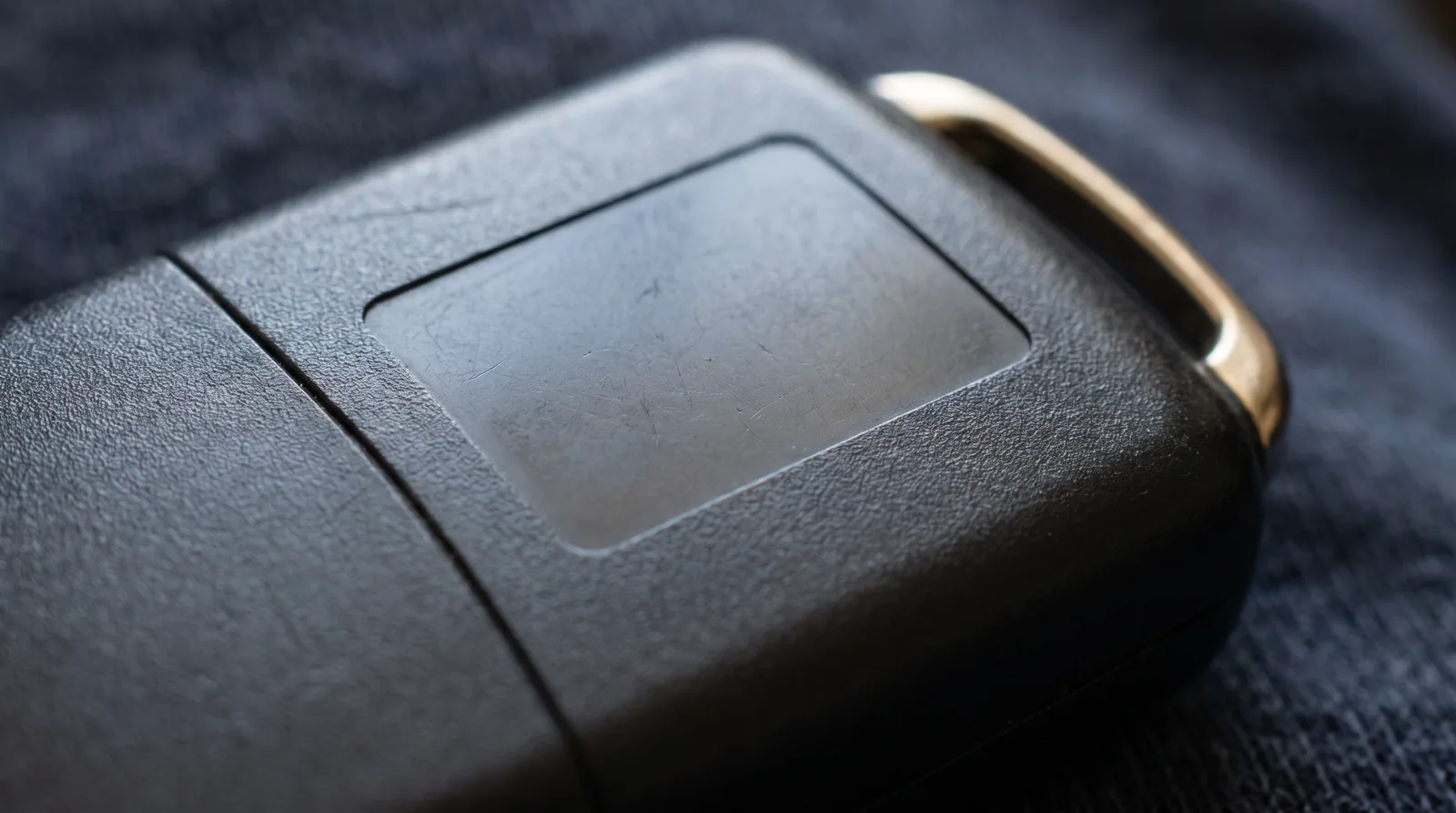
Two key fobs can look identical on the outside and share nothing on the inside — different frequency, different board, different vehicle list. That's why the single most useful thing printed on any fob is a short alphanumeric code most people never notice: the FCC ID. Learn to find it and read it, and "which remote does this car take?" stops being a guessing game.
What an FCC ID Actually Is
The FCC ID is a certification code issued by the US Federal Communications Commission for any device that intentionally transmits radio signals. A key fob is a small radio transmitter, so every fob legally sold in the United States must carry an FCC ID, printed or molded somewhere on the device. The code has two parts: a grantee code that identifies the manufacturer, followed by a product code that identifies the specific device. HYQ14FBA, for example, identifies a family of Toyota smart keys; KR5V2X identifies a Nissan and Infiniti proximity fob.
Because the ID is tied to certification of the exact radio hardware inside the case, it works as a fingerprint for the electronics — which is precisely what makes it so useful for replacement.
Where to Find the FCC ID on a Key Fob
Check these three places, in order:
- The back of the case. On most fobs the FCC ID is printed, lasered or molded into the rear shell in small text, usually alongside other regulatory marks. Angle the fob under a strong light — molded text is often the same color as the plastic and easy to miss.
- Under the battery cover, or inside the case. If the outside is blank or worn, pop the case open. The ID is frequently printed on a label stuck to the inner shell, or molded into the plastic beside the battery holder.
- Beside the emergency blade slot. On many smart keys, releasing and removing the emergency blade exposes a recess where the FCC ID is printed — a spot that never rubs against pockets, so it stays legible for years.
The text is small and often low-contrast, so a flashlight and a phone camera zoomed in will save your eyes. What you're looking for is the literal prefix "FCC ID" followed by the code.
Why the FCC ID Guarantees Fit
Certification is granted for a specific transmitter design: its frequency, modulation, board layout and firmware behavior. Two fobs carrying the same FCC ID therefore contain the same certified radio — which means the vehicle will hear them identically.
Part numbers can't make that promise on their own. Automakers issue different part numbers for what is essentially one radio — trim variants, logo differences, button counts, packaging changes — so a single transmitter design might hide behind a dozen manufacturer part numbers. Work backwards from the FCC ID instead and you land on the right radio family every time.
One honest caveat: a single FCC ID can cover several button layouts, since adding a trunk or remote-start button doesn't change the certified radio. So the working rule for exact-fit replacement is: match the FCC ID first to get the right radio, then confirm the button count and part number to get the exact configuration. That combination is the basis of our exact-fit guarantee.
How to Open a Fob Without Damaging It
If the code is only visible inside, open the case properly rather than forcing it:
- Remove the emergency blade first on smart keys and flip keys — there's a release button or slide catch at the base. This usually reveals the seam you'll work from.
- Find the pry notch. Most fobs have a small slot along the seam, often in the recess where the blade sat. It exists specifically so the case can be opened without chewing up the joint.
- Use a plastic pry tool or a coin wrapped in tape, twist gently at the notch, and work along the seam rather than levering hard at one point. The shells are clipped, not glued, and they separate cleanly when you follow the clips.
- Note the battery orientation before anything shifts, so reassembly is mindless.
The same steps apply when swapping a battery — our key fob battery replacement guide covers the process case-style by case-style.
What If the Label Is Worn Off
Fobs live in pockets with coins and keys, and printed IDs do wear away. In that case:
- Read the board, not the shell. Open the case fully and look at the circuit board — the manufacturer part number is usually silkscreened directly on the PCB, and that number cross-references back to the FCC ID.
- Run a cross-reference lookup from whatever number you can read: manufacturer part number, board marking, or a partial FCC ID is often enough to pin down the family.
- Fall back to year, make and model. It's less precise than a hardware identifier — trim and option packages can change the answer — but combined with a photo of the fob it usually gets there. Find My Fob supports exactly this path.
One warning: never identify a fob by its shell shape alone. Replacement shells are sold separately and swapped constantly, so the outside of a well-worn fob may have nothing to do with the board inside it.
FCC ID vs IC Number
Next to the FCC ID you'll often see a second code prefixed "IC" — the Canadian certification number, issued under what was Industry Canada (now ISED). The same hardware sold across North America typically carries both marks, and they identify the same device.
For locksmiths buying across the border in either direction, the pairing is genuinely useful: if the FCC ID has worn off but the IC number is legible, it maps back to the same transmitter, and a US-sourced and Canadian-sourced fob with matching FCC and IC marks are the same part.
Using the FCC ID to Order the Right Part
Every listing at Car Key Source carries the FCC ID alongside the brand and manufacturer part number, so once you've read the code off the customer's fob, ordering is mechanical: search the FCC ID in Find My Fob, or browse remotes and keys by category and match the ID on the listing.
Remember that the FCC ID describes the radio only. On keys and smart fobs there's also a transponder chip that must match the vehicle's immobilizer — a separate system entirely, covered in our guide to transponder keys. Matching FCC ID plus part number covers both bases, which is why we list both on every product.
FCC ID FAQ
Are two fobs with the same FCC ID interchangeable?
At the radio level, yes — same certified transmitter, same frequency, same protocol. In practice, confirm the button layout and part number before ordering, because one FCC ID can span several configurations. And interchangeable never means pre-programmed: the replacement still has to be programmed to the specific vehicle.
Is the FCC ID the same as the part number?
No. The part number is the manufacturer's own catalog identity for a specific product configuration; the FCC ID is a regulatory identity for the radio design inside. Several part numbers can share one FCC ID. For exact-fit replacement, the FCC ID narrows you to the right radio and the part number pins the exact variant — use both.
Car Key Source lists the FCC ID and part number on every remote, key and smart fob we stock — that's what lets us back each order with an exact-fit guarantee. Wholesale trade pricing for professional locksmiths in the US and Canada, with same-day dispatch on orders placed by 4 PM ET. Apply for a wholesale account to unlock trade pricing.
Try it on a real listing
Every product page carries the FCC ID in plain text, next to the part number, frequency and button count — so you can check your read against the listing before you order. Three worth bookmarking because their FCC IDs come up constantly:
- HYQ14FBC — 2019–2024 Toyota RAV4 smart key
- M3N-40821302 — 2014–2022 Jeep / Dodge 5-button smart key
- HYQ1EA — 2015–2021 Chevrolet Suburban / Tahoe smart key
Reading the code off the label is only half the job — browse by vehicle to see every part we hold for that make and model.
Get trade tips in your inbox
Programming guides, sourcing tips and new-stock drops for working locksmiths. No spam, unsubscribe anytime.
So we can call you about fitment or your order.
About the author
Written by the working locksmiths behind the Car Key Source trade desk — the people who answer the phone when a key will not program. Questions about a specific job? Email info@carkeysource.com.
Buying keys for a shop or van?
Trade pricing is for locksmiths and shops. One short form, free, no card. Most accounts are approved instantly.