
Which Key Fobs Are Worth Stocking on the Van
Cash tied up in slow movers is dead margin, but a missed job costs the whole ticket. A working framework for the middle path.
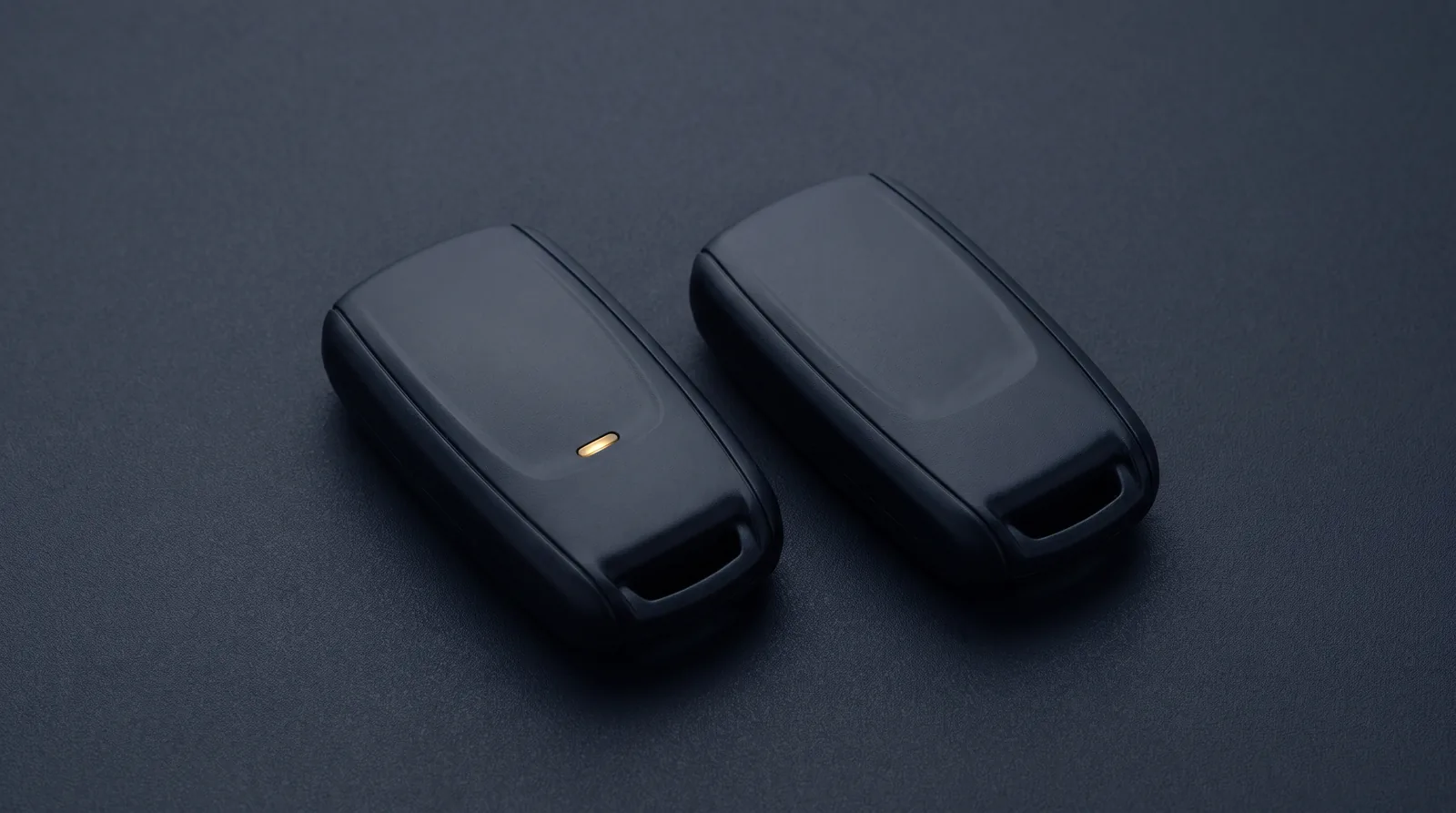
Every locksmith van is a bet. Every fob in the drawer is money that could have been somewhere else, and every fob not in the drawer is a job you might have to walk away from. Getting that bet right is one of the quiet differences between a shop that grinds and a shop that compounds.
The catalog does not make it easy. Every model year adds new part numbers, smart keys displace flip keys, and a fob that moved monthly in 2022 can sit for two quarters today. Cash tied up in slow movers is dead margin. But the other side of the ledger is worse: a missed job does not just cost the part markup — it costs the full ticket, the drive out, and usually the customer, who calls someone else next time. The answer is not more stock or less stock. It is structured stock.
Think in coverage tiers
Tier 1: high-frequency fobs for your local top sellers
Start with what is actually parked in your service area. Across most of the US and Canada, the same vehicles dominate the call log: F-150, Silverado and Sierra, RAV4, CR-V, Camry, Civic, Altima and their platform siblings. A relatively small set of SKUs covering the best-selling vehicles of the last ten to fifteen model years catches a disproportionate share of everyday work. These are the fobs that should never be out of stock on the van — you will touch them week in, week out, and their turnover justifies the shelf space.
Your area will have its own tilt — fleet trucks in one market, Korean brands in another. Let your own call log, not a national sales chart, make the final call.
Tier 2: universal and programmable smart keys as gap-fillers
The middle of the demand curve is where universals earn their keep. A Lonsdor-style universal smart key or a quality programmable remote is one SKU that stands in for dozens of vehicle-specific part numbers — which matters most on all-keys-lost calls, where the customer is stranded and "I can order it for Thursday" is not an answer. A handful of universal smart keys and remotes turns a wall of maybe-someday part numbers into a single restock line. Universals come from the tool ecosystems — Xhorse, Lonsdor, Keydiy — rather than from us: Car Key Source stocks the vehicle-specific side of the shelf, so browse the smart key and proximity section for the dedicated parts that back up your Tier 1 list.
Tier 3: everything else, ordered on demand
The long tail — the discontinued trim, the rare Euro import, the one Alfa Romeo in the county — should live at your supplier, not on your van. This only works if the supplier is fast and accurate, which is exactly the model Car Key Source is built on: wholesale trade accounts with same-day dispatch on orders in by 4 PM ET, and every part matched by FCC ID or part number so the box that arrives is the part the job needs. When the tail is a day away, you can stop paying to warehouse it yourself.
A simple stocking framework
You do not need inventory software to get this right. You need a notebook and a little discipline:
- Track 90 days of jobs. Every key job, log the vehicle, the part used (or the part you were missing), and whether you had it on hand. Ninety days smooths out the noise without going stale.
- Stock what you touched three or more times. Anything that came up three times in a quarter is Tier 1 for your market. Put it on the van and keep it replenished.
- Cover the middle with universals. For the vehicles that showed up once or twice, decide whether a universal covers the application. If yes, that demand rolls into your universal stock instead of a dedicated SKU.
- Source the tail on demand. Everything else gets ordered per job from a supplier fast enough that the customer barely notices. Quote the job, order the part, schedule the return visit.
Rerun the exercise twice a year. Vehicle populations shift slowly, but they do shift — and the framework only works if the data underneath it is yours and current.
Batteries, blades and shells
The cheapest items in the drawer save the most jobs per dollar. Keep a healthy stock of CR2032 and CR2025 coin cells — they cover the bulk of automotive fobs, and a fresh battery at handover prevents the "new fob is dead" callback that costs you a trip and some reputation. Our key fob battery replacement guide covers which cells go where. Add emergency key blades for the smart keys you stock, and a small assortment of replacement shells: a shell-and-cut job on a customer's working electronics is quick, profitable and an easy yes for the price-sensitive caller.
Reorder discipline
Stock only works if it refills itself before it runs out. Set a par level for every Tier 1 SKU — the quantity you want on hand — and a reorder point that triggers before you hit zero, not after. Batch the reorder weekly so freight consolidates; with volume discounts up to 15% and free freight over $250, a single weekly order is usually better economics than three small ones.
Then make ordering frictionless. Trade accounts are free to set up, and once approved you can price a job on the spot with an instant quote and reorder your regulars in a few clicks. The less ceremony a reorder takes, the more likely it happens on time — inventory failures are usually discipline failures, not demand surprises.
The math of wholesale vs retail sourcing
Some locksmiths cover gaps by buying fobs one at a time from auction sites and retail marketplaces. It feels flexible, but look at the whole picture. Buying at or near retail leaves you marking up a part the customer can price-check on their phone, which squeezes the labor side of the ticket. Wholesale sourcing restores the parts margin on top of your labor — the same job, meaningfully better economics, on every single ticket.
The risk side matters just as much as the margin side. Marketplace fobs arrive with unknown provenance: pulled units that may be locked to their original vehicle, relabeled aftermarket boards in factory-branded shells, no meaningful warranty, and no one to call when the part will not program at the car. A wholesale supplier that matches parts by FCC ID and part number and stands behind an exact-fit guarantee shifts that risk off your ticket. You are not just buying the fob — you are buying the certainty that the second site visit will not be free.
FAQ
How much stock should a one-van operation carry?
There is no universal number, but the shape is consistent: enough Tier 1 stock to cover a typical week or two of jobs without a resupply, plus a modest universal-key reserve for all-keys-lost work. For many one-van operations that lands in the range of a few dozen fob SKUs plus batteries, blades and shells — but your own 90-day job log should set the number, not a rule of thumb.
Are universal remotes good enough?
For a large share of everyday RKE and smart-key applications, yes — modern programmable universals are reliable, and in daily use the customer experience is equivalent. Where they are the weaker choice is narrower, but real: comfort-access and other convenience functions that lean on the original module behaviour, some late-model luxury platforms, and customers who specifically want a factory-branded fob in their hand. On those jobs the dealer-supplied part is the safer call, and it is worth quoting it that way rather than forcing a universal into the slot. Keep both routes open and decide per job rather than per policy.
Car Key Source does not supply dealer parts — the catalogue is quality aftermarket throughout. What we do take on is the risk: match the FCC ID, part number or cross-reference and fitment is guaranteed, and if a correctly matched key still will not program, having attempted it does not void the return — send it back with the vehicle, the tool you used and the error message for a replacement or a full refund.
*Car Key Source is the restock side of this system: trade-only wholesale pricing on keys, remotes and smart fobs for professional locksmiths in the US and Canada, matched by FCC ID or part number with an exact-fit guarantee and same-day dispatch by 4 PM ET. Apply for a trade account and turn the long tail of the catalog into someone else's shelf space.*
What we actually carry deepest
Stocking advice is worth nothing without a source. These are the makes we hold the most published SKUs for — each page shows a live count, the model years covered and every FCC ID in that range, so you can see the depth rather than take our word for it:
Toyota · Ford · Honda · Nissan · Dodge · Hyundai · Chevrolet · Jeep · Chrysler · Mazda · Kia · Lexus
Broad-fit parts earn their space on the van because one SKU covers a lot of platforms. Four that do:
Get trade tips in your inbox
Programming guides, sourcing tips and new-stock drops for working locksmiths. No spam, unsubscribe anytime.
So we can call you about fitment or your order.
About the author
Written by the working locksmiths behind the Car Key Source trade desk — the people who answer the phone when a key will not program. Questions about a specific job? Email info@carkeysource.com.
Buying keys for a shop or van?
Trade pricing is for locksmiths and shops. One short form, free, no card. Most accounts are approved instantly.