
How Much Does Key Fob Programming Cost? (2026 Pricing Guide)
Typical 2026 price ranges for remote pairing, transponder keys, smart keys and all-keys-lost — and what actually drives the number.
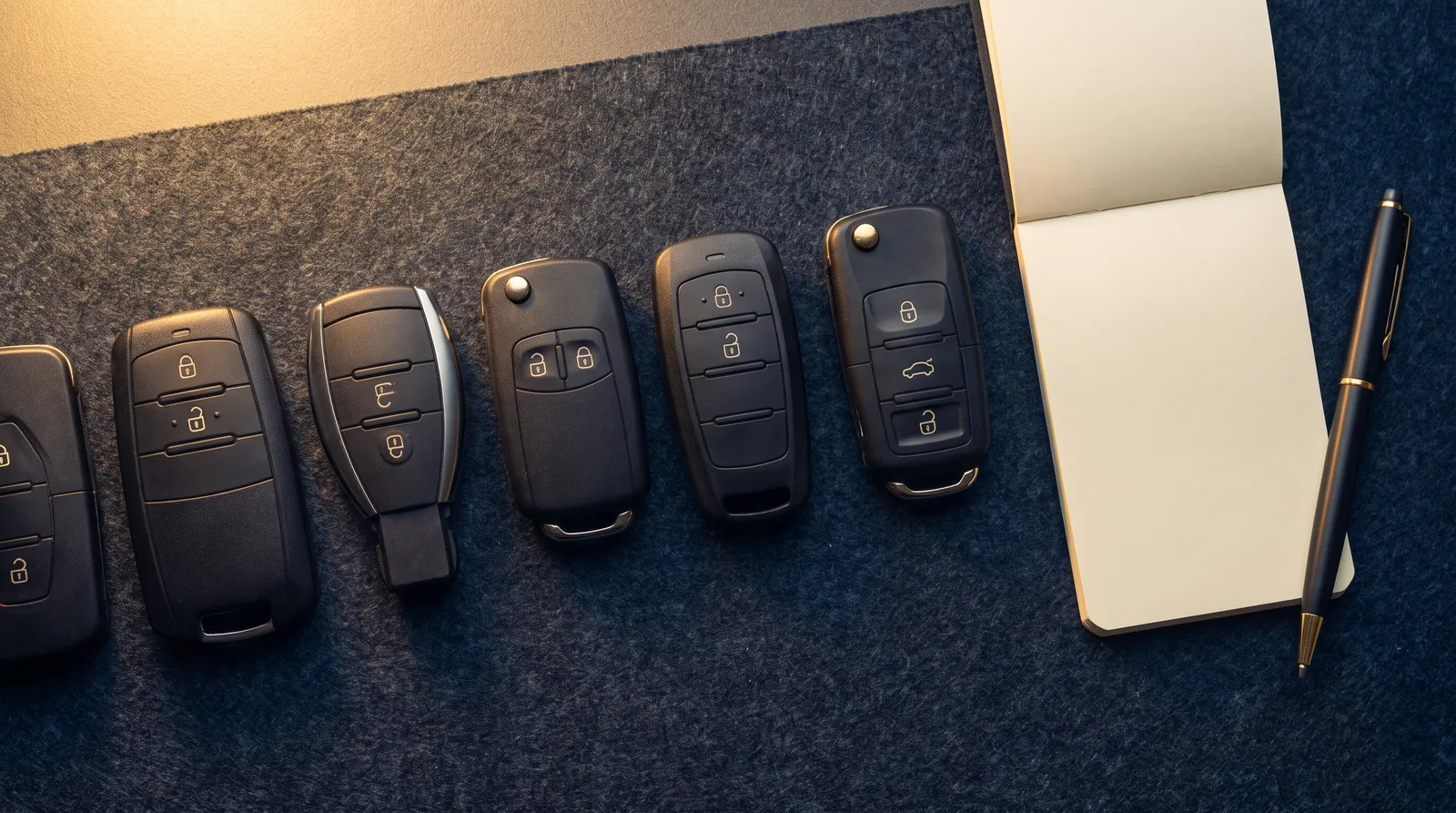
The honest answer to "how much does it cost to program a key fob" is: it depends on what kind of key it is and whether you still have a working one. The spread is real — a simple remote pairing can be a $50 job, while an all-keys-lost situation on a late-model push-to-start vehicle can run past $600. We run a wholesale trade desk that supplies automotive locksmiths, so we see this priced from both sides of the counter: what shops pay for parts, and what they charge for the work. Here are the typical ranges we would consider fair in 2026. And before paying for anything, make sure it is actually a programming problem — a weak fob battery mimics one, and our key fob battery guide is a two-minute check.
Typical key fob programming costs in 2026
| Job | Typical range |
|---|---|
| Basic RKE remote pairing (buttons only) | $50–$100 |
| Transponder key, add-a-key | $75–$150 |
| Smart / proximity key, add-a-key | $150–$300 |
| All keys lost | $200–$600+ |
Three notes on reading the table. Prices usually cover the programming labor but not always the fob itself — ask whether a quote is parts-plus-programming or all-in. Dealerships typically land at or above the top of each range; for all-keys-lost, add the cost of towing the vehicle to them, since it can't be driven. And location matters: big-metro rates run higher than small-town rates, and an after-hours emergency call carries a premium over a scheduled appointment anywhere. Treat quotes dramatically below these ranges with suspicion too — bait pricing that doubles on arrival is the most common complaint we hear about in this trade.
What actually drives the price
The equipment behind the job. A professional key programmer is a four-figure investment, and it doesn't end at purchase: annual software subscriptions, per-vehicle tokens on some platforms, and paid server calculations for certain brands are real recurring costs a shop has to recover across its jobs.
The vehicle's security era. A late-90s sedan with a simple transponder is a quick enrollment. A 2010s vehicle adds encrypted rolling codes and PIN-protected immobilizer modules. A 2020s vehicle may sit behind a secured gateway that requires authenticated access before a tool can touch the immobilizer at all. Newer generally means slower, riskier and more expensive.
Add-a-key versus all keys lost. With a working key, the existing key vouches for the programming session. With no keys, the technician has to work through the vehicle's anti-theft protections legitimately — security waits, server codes, sometimes removing modules and reading them on a bench. Same car, wildly different job.
The fob hardware itself. A smart proximity fob is a small computer, and where it is bought matters — the retail-versus-wholesale gap on the part often explains more of the final invoice than the labor does.
Travel and timing. Mobile service to your driveway carries a call-out component, and a 2 AM lockout costs more than a Tuesday-afternoon appointment. Even so, mobile service is usually cheaper than towing the car to a dealership.
One offset worth checking: some comprehensive auto insurance policies, extended warranties and roadside plans cover lost-key replacement in part or in full. A five-minute phone call before you pay out of pocket occasionally turns a painful invoice into a deductible.
Dealer vs locksmith vs DIY
Dealership. Factory parts and factory tooling for even the newest platforms. Typically the most expensive path, often with a wait — keys and security codes are frequently special-order — and for all-keys-lost, the car has to get there on a truck.
Automotive locksmith. Carries the same class of programming capability for the large majority of vehicles, comes to you, and can usually do the job same-day. For most people, most of the time, this is the best value — which is why dealerships themselves sometimes sub this work out to local locksmiths.
DIY. If your vehicle is an older model that supports onboard programming, pairing a remote yourself costs nothing but time — our guide to how key fob programming works explains which vehicles qualify and walks through an example procedure. For push-to-start smart keys, DIY is rarely realistic; the tooling costs more than years of paying a professional, and a mistake can leave the vehicle in a worse state than a lost remote.
One caution either way: the money you save is only real if the part is right. A fob has to match on FCC ID, frequency and chip type, or no amount of programming will make it work. Find My Fob matches the correct part by year, make and model.
For locksmiths: the margin is in the part
If you're the one holding the programmer, you already know labor rates are capped by what your local market bears. The variable you control is the hardware. Buying fobs one at a time at retail — or from the dealer parts counter on a job-by-job basis — hands your margin to someone else's distribution chain.
Sourcing at wholesale changes the economics of every quote. The same smart-key job looks very different when the fob cost you a trade price instead of a walk-in price, and it changes what you can quote competitively — you can come in under the dealer on an all-keys-lost and still make more on the job. Run that math across a month of fob calls and the difference is not a rounding error; it is the profit line.
That is the business we are in. Car Key Source is trade-only: approved locksmith and shop accounts see wholesale pricing on quality aftermarket remotes, transponder keys and smart keys, listed by vehicle make, with every part matched by FCC ID and part number under an exact-fit guarantee.
FAQ
Is it cheaper to program a key fob at the dealer?
Rarely. Dealers carry the highest parts pricing and labor rates, and for all-keys-lost you also pay to tow the car there. The cases where the dealer makes sense: brand-new platforms independent tools don't cover yet, and warranty or goodwill situations where you aren't paying anyway.
Can AutoZone or other parts stores program key fobs?
Sometimes, for the simple cases. Some store staff will run an onboard RKE pairing on vehicles that support it, usually with a fob or battery purchased in-store. Transponder registration and smart keys are outside what a parts counter can do — that work needs a programmer and someone trained on it.
How long does key fob programming take?
An add-a-key with a working key on hand is often 15 to 30 minutes of actual work. All-keys-lost can run from an hour to most of a day, depending on the vehicle's security waits and whether any bench work is involved.
Why does all-keys-lost cost so much more?
Because there is no working key to authenticate the session, the technician has to work through the vehicle's anti-theft protections the long way — timed security waits, server-calculated access codes, sometimes bench work on removed modules. It is hours of skilled labor where an add-a-key is minutes.
Sourcing fobs for your shop? Browse the catalog by vehicle or FCC ID, backed by an exact-fit guarantee and same-day dispatch on orders in by 4 PM ET. Apply for a wholesale account or price a part right now with Instant Quote.
Where the part cost sits
Programming labour is yours to price. The part is the part — and knowing it before you quote is the difference between a clean job and a callback. Typical replacements behind the numbers above:
- 2019–2024 Toyota RAV4 smart key, HYQ14FBC
- 2017–2026 Ford Explorer / Expedition smart key, M3N-A2C931426
- 2018–2022 Honda Accord smart key, CWTWB1G0090
Trade pricing is shown to approved accounts only — apply once and it unlocks across the catalogue, or browse by vehicle first.
Get trade tips in your inbox
Programming guides, sourcing tips and new-stock drops for working locksmiths. No spam, unsubscribe anytime.
So we can call you about fitment or your order.
About the author
Written by the working locksmiths behind the Car Key Source trade desk — the people who answer the phone when a key will not program. Questions about a specific job? Email info@carkeysource.com.
Buying keys for a shop or van?
Trade pricing is for locksmiths and shops. One short form, free, no card. Most accounts are approved instantly.